Direct Investing vs Mutual Fund Distributor in Delhi: Understanding the Difference
When investors begin exploring mutual funds, one common question arises: Should they invest directly through online platforms or invest through a distributor?
Both options exist today, and each works differently. Understanding how these two ways differ can help investors decide which process suits their needs.
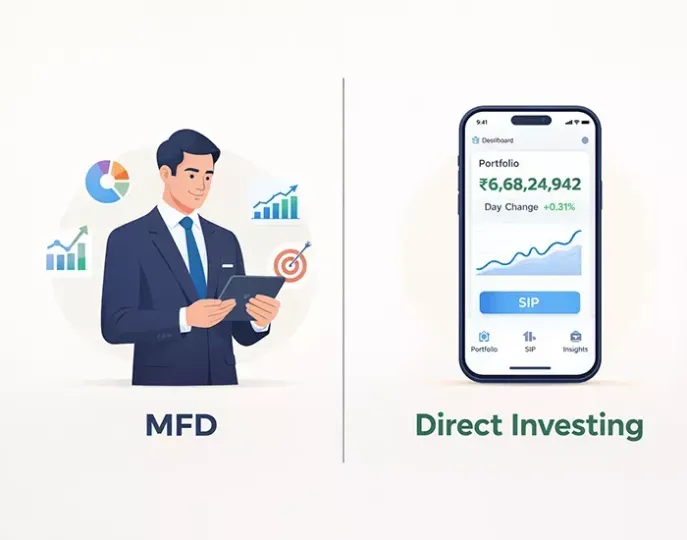
Some investors prefer handling everything in the investment process themselves, while others choose operational support through a Mutual Fund Distributor in Delhi, who helps in executing the investment process.
Let’s understand the key differences.
What is Direct Mutual Fund Investing?
Direct investing means purchasing mutual fund units directly from the asset management company (AMC) or through an online investment platform.
In this method, investors handle everything independently, including:
- Researching mutual fund schemes
- Completing KYC and documentation
- Setting up SIPs
- Monitoring portfolio performance
- Making redemption requests
Direct investing gives investors complete control over their investment decisions and requires them to manage all aspects of the investment process.
Investing Through a Distributor
Some investors prefer working with a distributor who helps facilitate mutual fund transactions.
For example, services such as a mutual fund sip planner in Delhi may assist investors with operational aspects like:
- Setting up SIP registrations
- Completing documentation requirements
- Processing transactions
- Helping with account updates
The investor still makes the investment decisions, while the distributor assists with the execution and process-related steps.
Differences Between Direct Investing and Distributor-Based Investing
1. Responsibility for Research
With direct investing, investors conduct all research themselves. They must evaluate:
- Mutual fund categories
- Risk levels
- Historical performance
- Investment duration
When investing through distribution services, investors still decide which investments to make, but the distributor helps facilitate the process of executing those transactions.
2. Time Commitment
Direct investing requires investors to spend time understanding:
- Mutual fund schemes
- Market movements
- Portfolio allocation
Some investors prefer to manage these aspects independently.
Others prefer working with a mutual fund service in Delhi that assists with operational tasks such as transaction processing and documentation.
3. Portfolio Tracking
Investors who choose the direct route must track their portfolios themselves.
This includes:
- Reviewing fund performance
- Monitoring asset allocation
- Tracking investment goals
Investors working through distributors may receive transaction records and portfolio statements that help them monitor their investments.
4. Operational Assistance
Mutual fund transactions involve several operational steps such as:
- KYC updates
- Bank mandate registration
- SIP modifications
- Redemption requests
Direct investors must complete these steps independently. Distributors assist with these processes by facilitating the required documentation and transaction execution.
5. Understanding Investment Structure
Mutual funds include different types of schemes such as:
- Equity funds
- Debt funds
- Hybrid funds
- Index funds
Each category has different characteristics. Investors who invest directly must understand these categories and choose accordingly.
When transactions are done through a distributor, the distributor facilitates the process of investing in the selected schemes.
Advantages of Direct Mutual Fund Investing
Direct investing gives investors full control over their investment decisions. Many experienced investors prefer this approach because they like managing their investments independently.
Some advantages include:
- Investors can research and choose funds themselves
- Complete control over investment decisions
- Flexibility to manage the portfolio independently
- Suitable for investors who understand mutual fund categories and market movements
However, direct investing requires investors to spend time understanding the investment process and monitoring their portfolios regularly.
Advantages of Investing Through a Mutual Fund Distributor
Some investors prefer investing through a distributor because it helps simplify the operational aspects of investing. A distributor helps facilitate processes such as:
- Completing documentation requirements
- Setting up SIP registrations
- Processing investment transactions
- Maintaining investment records
Investors may choose to work with a Mutual Fund Distributor (MFD) when starting or managing their SIP investments. An MFD can assist with the process of setting up SIPs, completing documentation, and handling transaction-related steps.
This approach can be helpful for investors who prefer support with the operational aspects of mutual fund investing rather than managing every process on their own.
Which Approach Works Better?
There is no single answer.
Some investors prefer direct investing because they enjoy managing their investments themselves. Others prefer investing through a distributor because it simplifies the operational aspects of investing.
The choice depends on factors such as:
- Investor experience
- Comfort with financial products
- Time available to manage investments
- Preference for handling processes independently
Both approaches allow investors to access mutual funds, and the most suitable option depends on what works best for the individual investor’s situation.
Why Process Support Matters for Many Investors
For many investors, the biggest challenge is not investing but managing the process. This includes:
- Documentation
- Transaction execution
- SIP setup
- Record keeping
Working with a distributor can make these operational steps easier, especially for investors who are new to mutual funds.
Conclusion
Direct investing and distributor-based investing are simply two different ways to access mutual funds. Direct investing offers independence and requires investors to manage the entire process themselves.
Distributor-based investing provides assistance with transaction execution and documentation while the investor continues to make their own investment decisions.
Ultimately, the best approach is the one that allows investors to stay consistent and comfortable with their investment process.